1. Can foreigners buy property in France?
Yes, with no restrictions at all. France is one of the most foreigner-friendly property markets in the world. EU citizens, British (post-Brexit), American, Canadian, Australian — all have identical rights. You don't need French residency, a French bank account, or a French tax number before you buy.
France has one crucial simplification: the notaire handles the entire transaction. A notaire is a public official (not a private lawyer) who searches title, collects taxes, writes the deed, and registers the sale. One notaire can represent both parties — though you're entitled to appoint your own at no extra cost, and for a cross-border purchase, you probably should.
Once you own property, you'll need to register for French tax every year (the infamous déclaration des revenus) if you're a resident, and pay the annual taxe foncière as an owner regardless of residency.
2. How much does a house in France cost?
The honest answer: France has the widest price range in Western Europe. A Paris apartment costs more per m² than Manhattan. A Limousin farmhouse costs less per m² than a Glasgow terrace. Here's what your budget buys in 2026:
| Region | Liveable 2-bed entry price | €150k "nice" budget buys |
|---|---|---|
| Paris (inside périphérique) | €400k+ | Not much — maybe a studio |
| Côte d'Azur (Nice, Cannes) | €250k+ | 1-bed apartment, edge of town |
| Provence (Luberon) | €200k+ | Small village house, needs work |
| Dordogne | €100k+ | Stone farmhouse, land, habitable |
| Brittany (coastal) | €150k+ | Stone longère near the sea |
| Brittany (inland) | €60k+ | Stone cottage + garden |
| Normandy | €90k+ | Half-timbered house, village |
| Limousin & Creuse | €55k+ | Full farmhouse, land, outbuildings |
| Languedoc-Roussillon | €120k+ | Stone village house, Mediterranean |
| Auvergne | €70k+ | Mountain house with view |
Source: DreamProp scraping data across 1,736 live French listings. Current median price on our platform: €150,000.
3. Best regions for foreign buyers
Dordogne & Lot
🧀 The original British enclave, for good reasons.
Périgord Noir, Bergerac, Sarlat. Long summers, rich food, honey-stone villages. Habitable farmhouses from €100k. Bergerac and Brive airports have direct UK flights. Anglophone community is substantial — charm or drawback depending on taste.
Best for: families, foodies, classic "French dream" buyers.
Brittany
🌊 Celtic, rainy-at-times, coastal, unbelievably cheap inland.
Cornwall prices for a coastline three times the length. Inland stone cottages from €60k, coastal longères from €150k. Ferry connections from Portsmouth / Plymouth make it the easiest region to visit from the UK.
Best for: British buyers, sailors, oyster obsessives.
Limousin & Creuse
💶 The cheapest habitable rural property in Western Europe.
Green, wooded, emptying, beautiful. Full farmhouses with outbuildings and land from €55k. Limoges airport, TGV from Paris 3 hours. Winters can be long. Lots of British sellers now cashing out — opportunity for patient buyers.
Best for: FIRE-movement expats, artists, animal keepers.
Normandy
🐄 The classic second-home region for Londoners.
90 minutes from Portsmouth by ferry. Cider, Calvados, half-timbered houses. Village houses from €90k, coastal from €200k. Pays d'Auge and Cotentin are the most popular areas. Greener than the Loire, wetter than Burgundy.
Best for: weekenders from the UK, history buffs.
Provence & Côte d'Azur
☀️ Beautiful, celebrated, and largely very expensive.
Village houses in the Luberon or behind Nice from €200k — villas €600k+. The high Var, inland Vaucluse and Alpes-de-Haute-Provence are 30–40% cheaper than the glossy coast. Summers crowded and hot; off-season wonderful.
Best for: buyers with budget, sun-seekers.
Languedoc & Occitanie
🍷 Provence's quieter southern neighbour, with more coast and less price.
Carcassonne, Béziers, Montpellier, Sète. Mediterranean climate, cheaper wine, fewer celebrities. Stone village houses from €120k. Up-and-coming and still good value for actual Mediterranean property.
Best for: Mediterranean fans on a realistic budget.
4. The post-Brexit 90/180 rule (Brits only)
Since 1 January 2021, British passport holders are third-country nationals under EU law. The practical impact for UK buyers of French second homes:
- 90 days in every 180 across the whole Schengen area. Not "90 days in France, 90 in Italy" — it's cumulative.
- Staying longer requires a long-stay visa (VLS) — see next section.
- You can still buy, own, and spend money in France freely — you just can't physically stay beyond 90/180 without a visa.
- Owning property does not grant longer stay rights. This is the single biggest surprise for UK second-home owners.
5. Visa options for non-EU buyers
| Visa | Requirement | Can work? | Best for |
|---|---|---|---|
| VLS-TS Visiteur (Long-stay visitor) | ~€1,450/mo passive income (French minimum wage) | No | Retirees, second-home owners wanting more time |
| Talent Passport — Remote Worker | Employment contract + sufficient income | Remotely yes | Remote employees |
| Talent Passport — Business Investor | €300k investment + business plan | Yes | Investors, entrepreneurs |
| Profession Libérale | Self-employed business plan + French client base | Yes (self-employed) | Freelancers, consultants |
| EU citizens | None (freedom of movement) | Yes | Anyone with EU passport |
The VLS-TS Visiteur is the route most British and American second-home owners end up taking — you sign a sworn statement not to work (remotely or otherwise) in France. Permanent residency comes after 5 years of consecutive renewals.
6. Step-by-step: how to actually buy
-
1
Find the property
Visit in person — France has more regional variation per mile than anywhere in Europe. Use a French-speaking agent or get our weekly digest.
-
2
Make an offer
Usually verbal through the agent first, then an offre d'achat in writing. Once accepted, the sale is informally binding until the preliminary contract.
-
3
Sign the Compromis de Vente
Preliminary contract, usually prepared by the notaire or agent. 10% deposit in escrow. Includes standard exit clauses (conditions suspensives) like mortgage approval and planning checks.
-
4
10-day cooling-off period
After signing the compromis you have 10 calendar days to withdraw without penalty. After that, your deposit is at risk.
-
5
Notaire does title, searches & diagnostics
Roughly 2–3 months. The seller provides a bundle of mandatory surveys (asbestos, lead, termites, energy rating, gas, electricity, natural risk). Your notaire verifies title and planning status.
-
6
Sign the Acte de Vente
The final deed, signed at the notaire's office (or by power of attorney / electronic signature). Balance paid, keys handed over, you're the owner immediately.
-
7
Set up utilities & taxes
EDF (electricity), water, internet. Register for taxe foncière and (if it's a second home) taxe d'habitation. Your notaire handles the Land Registry inscription automatically.
7. Fees, taxes & hidden costs
France is wonderfully transparent about costs — almost all of them are bundled into the single frais de notaire. Budget 7–8% on old properties (over 5 years) and 2–3% on new builds. Example for a €200,000 rural house:
| Line item | Cost on €200k | Notes |
|---|---|---|
| Transfer taxes (droits de mutation) | ~€11,500 | 5.8% — the biggest part of notaire fees |
| Notaire's emoluments | ~€2,200 | Regulated scale |
| Disbursements & searches | ~€1,000 | Registrations, Land Registry, etc. |
| Estate agent commission | €0 typically | Usually baked into asking price (5–8%) |
| Diagnostic pack (seller pays) | €0 for buyer | Legal obligation on seller |
| Total frais de notaire | ~€14,700 (7.35%) | Less on higher-priced properties |
Ongoing costs: taxe foncière (council tax, €500–€1,500/year), taxe d'habitation (abolished for main homes but still applies to second homes, often surcharged in tourist zones — €500–€2,000/year), insurance (~€300), EDF / water (€800–€1,500 even on modest use). Budget €1,500–€3,500/year to hold a typical rural French second home.
8. Inheritance: the Napoleonic trap
France has forced heirship: your children are automatically entitled to a reserved share of your estate, regardless of what your will says. For a French property owner with three children, up to 75% is automatically earmarked for them.
Since 2015, EU regulation 650/2012 ("Brussels IV") lets you elect the law of your nationality to govern your French estate — provided you do it explicitly in your will. For UK, US, Australian and most non-EU buyers this is a no-brainer and should be set up at the same time as purchase. Ask your notaire about the clause de droit applicable. A 2021 French law has muddied this slightly for EU nationals, but it generally still works for non-EU owners.
Inheritance tax between spouses is zero in France. Between parents and children, €100,000 per child is exempt, then progressive 5–45%. Step-children and unmarried partners face brutal rates (60% above €1,594) — many cross-border families use an SCI (société civile immobilière) to hold property and mitigate this.
9. French properties available now
Hand-picked from DreamProp's database of 1,736 live French listings — all currently for sale, all under €200,000.
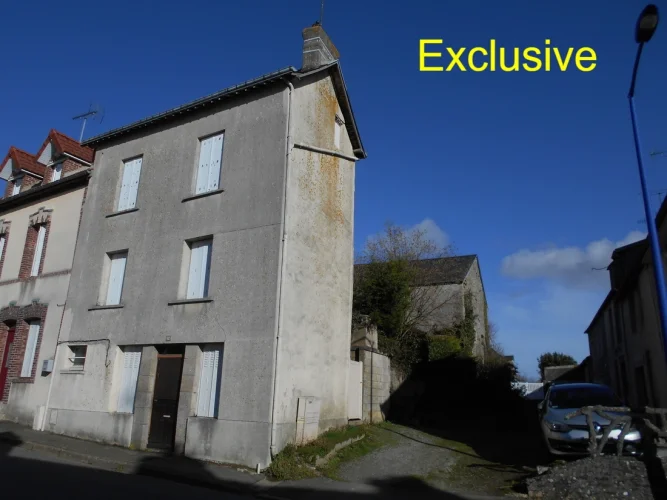 Renovation project
€17,900
2-Bed Semi-Detached Town House to Renovate, with Garden, in Pré-En-Pail-Saint-Samson
France
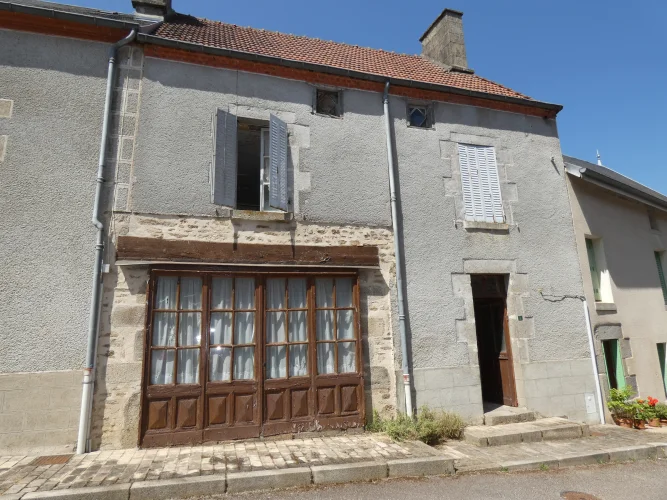 Renovation project
€18,000
Terraced Village House for Renovation, Mains Drainage, Bread Oven.
France
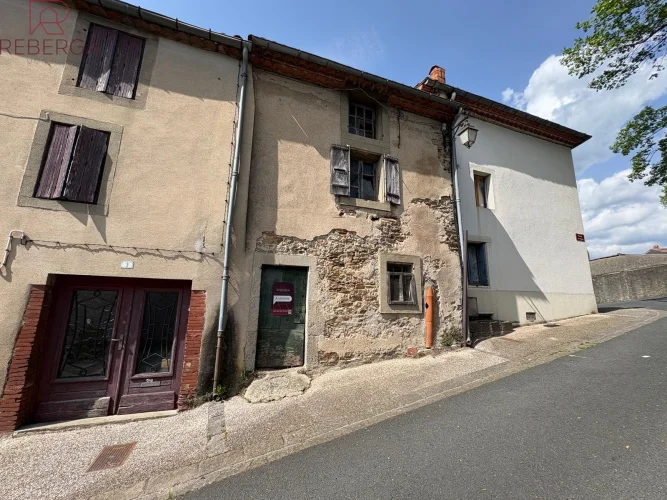 Renovation project
€19,000
Saint Amans Soult House
Midi-Pyrénées, France
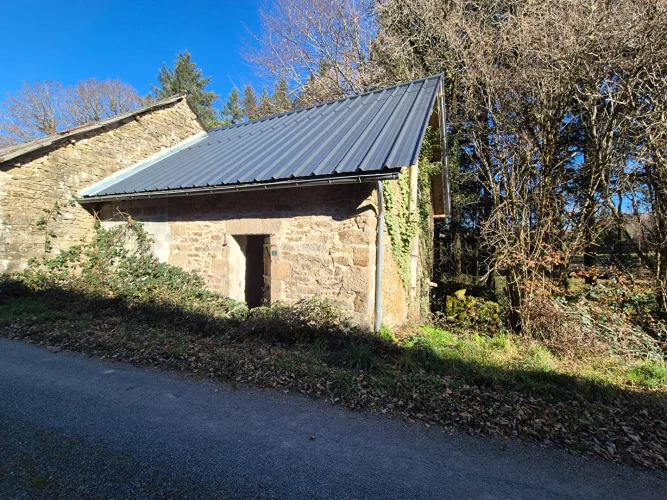 Renovation project
€20,000
Correze. Madranges. Stone House for Renovation with Land of 780m².
Limousin, France
 Renovation project
€22,900
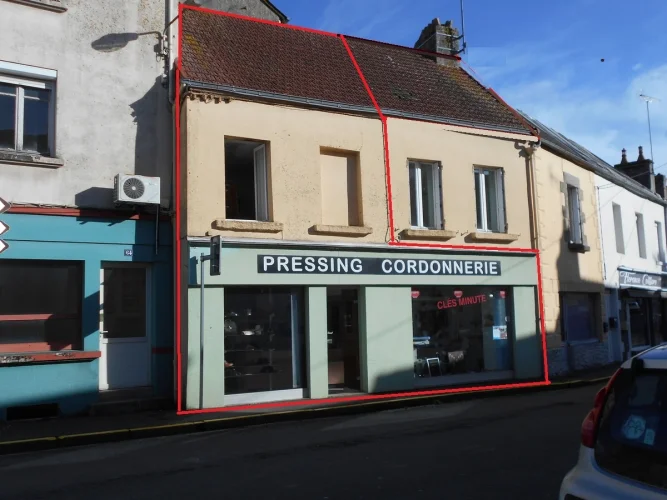
Commercial Shop with Upstairs Accommodation Potential, to Renovate, in Pré-En-Pail-Saint-Samson
France
 Renovation project
€23,000
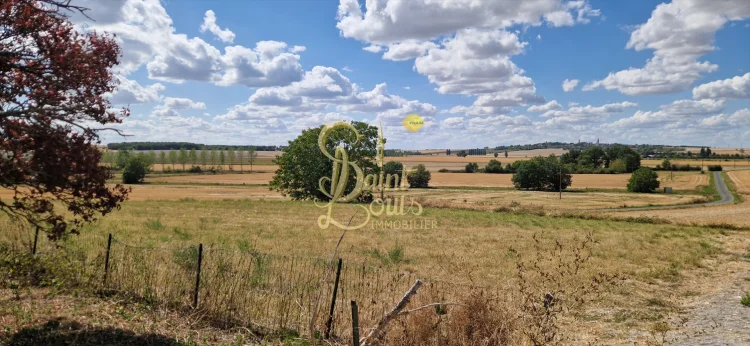
Little Farmhouse to Renovate
France
10. Frequently asked questions
Can Brits still buy property in France after Brexit?
Yes — Brexit changed nothing about British buying rights. The only change is how long you can stay without a visa (90 days in every 180 across the whole Schengen area). You can still own, rent, renovate and sell French property just as before.
How much is the notaire fee in France?
Around 7–8% of the purchase price on resale properties, 2–3% on new builds. Most of this is actually government taxes; the notaire's own emoluments are only a small portion. On a €200k old house, total fees are typically €14,000–€16,000.
Do I need a French mortgage to buy, or can I pay cash?
Most foreign buyers pay cash for cheaper rural properties. French banks will lend to non-residents at 70–80% LTV at 3.5–4.5% rates (2026), but the application is paperwork-heavy — allow 3+ months.
What's the difference between a compromis de vente and a promesse de vente?
Both are preliminary contracts. A compromis binds both parties — if either backs out, they owe the other typically 10% of the price. A promesse is a unilateral promise by the seller; the buyer pays a small fee for the option and can walk away losing only that.
Can I avoid French inheritance law by writing a foreign will?
Since 2015 you can elect the law of your nationality to govern your French estate, via EU regulation Brussels IV. This must be done explicitly — ask your notaire about the clause de droit applicable when signing the acte.
Is it true second homes now pay massively more taxe d'habitation?
Yes. Taxe d'habitation was abolished for main residences in 2023 but still applies to second homes, and many popular regions (Provence, Brittany coast, Pays Basque) now impose surcharges of 60%+ on top. Check the specific commune before buying.
Can Americans buy in France?
Yes — identical rights to EU citizens. You don't need residency, a French bank account or a French tax number to buy. For stays over 90 days, you'll need a VLS-TS visa. Many Americans successfully own a French second home without ever becoming tax resident.
Do I need my own lawyer if the notaire represents both sides?
Strictly no — but for non-French speakers, a bilingual second notaire (at no extra cost, since the notaires split the fee) or a French lawyer specialised in cross-border property is strongly advisable, especially for anything non-standard.